Can VLC Burn DVDs? The Workflow and Authoring Options

Summary: This guide covers how to burn DVD with VLC from start to finish, pairing VLC's conversion step with DVD Flick and ImgBurn since VLC alone can't build the disc structure or burn it. It also breaks down VLC's real pros and cons and three all-in-one alternatives, with platform support clarified for Mac, Windows, and Linux users, plus an expanded FAQ on hardware playback compatibility.
Table of Contents
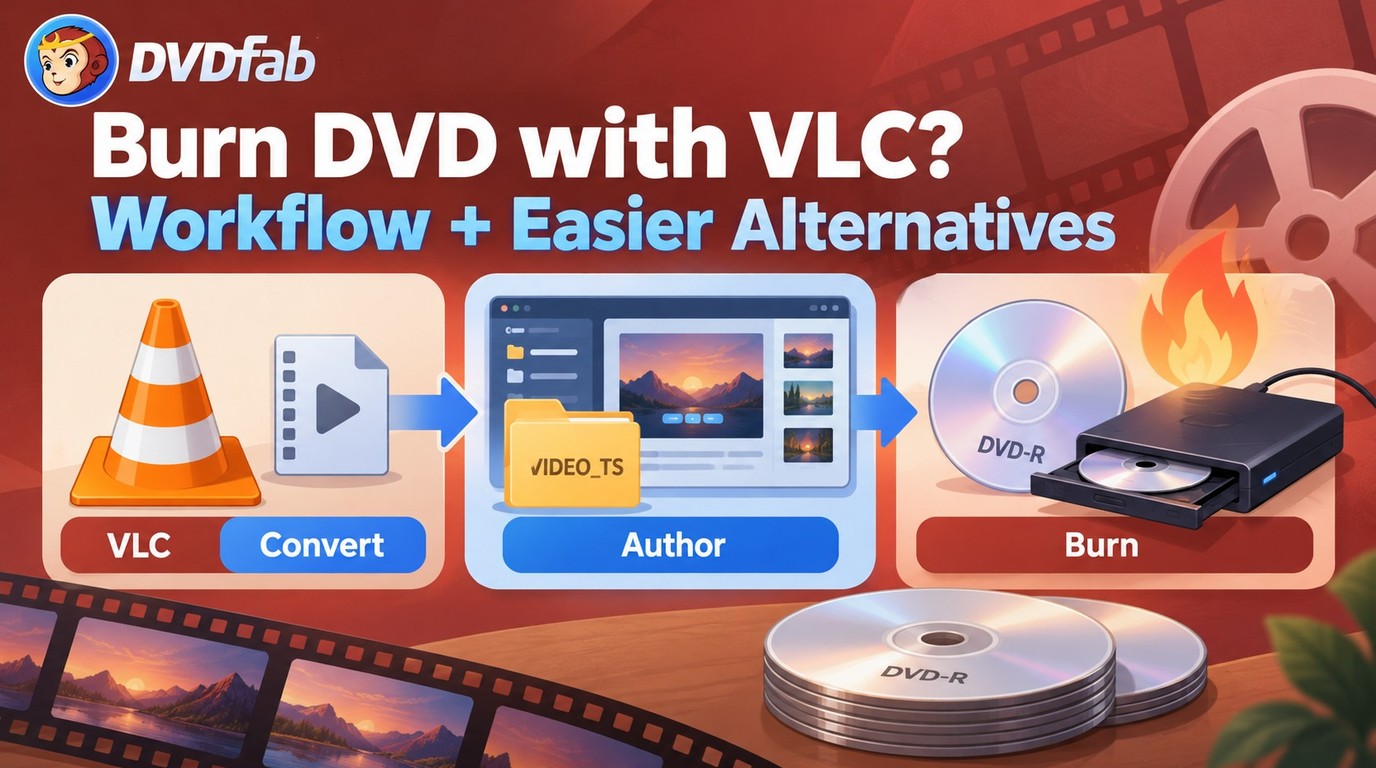
Trying to burn a DVD with VLC ends with a converted video file, not a finished disc. Can VLC burn DVDs? VLC can create an MPEG-2 source file, but it cannot author the DVD-Video structure or write that prepared output to blank media.
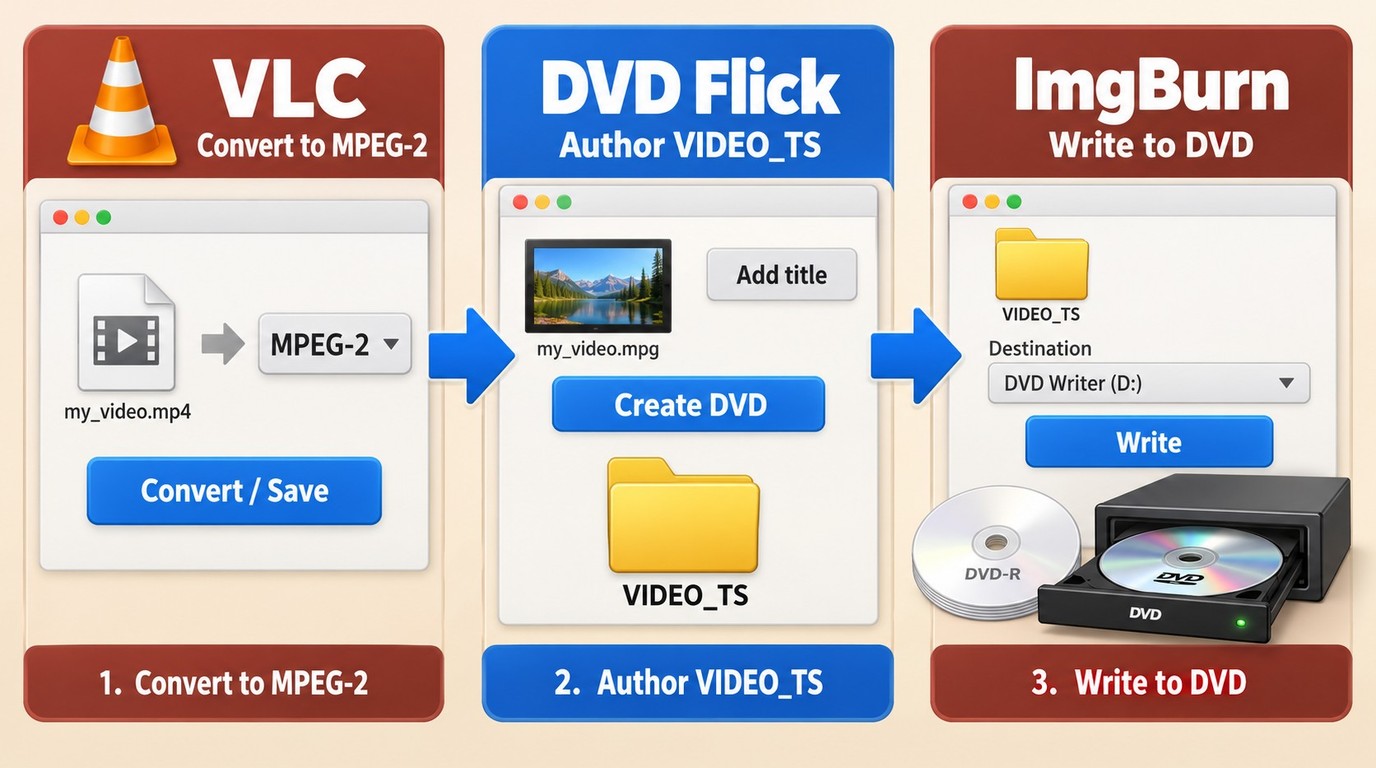
The complete workflow has three stages: convert the source video in VLC, author it as a VIDEO_TS folder or DVD ISO, and write that prepared output with disc-burning software. If you only need computer playback, you can skip the physical disc and open the converted file or authored VIDEO_TS folder directly in VLC.
How to burn DVD with VLC media player
Convert Video to DVD-Compatible MPEG-2 with VLC
Step 1: Open VLC and open the "Media" menu, selecting "Convert / Save".
Step 2: In the Open Media window, add the video files you want to include for the DVD.
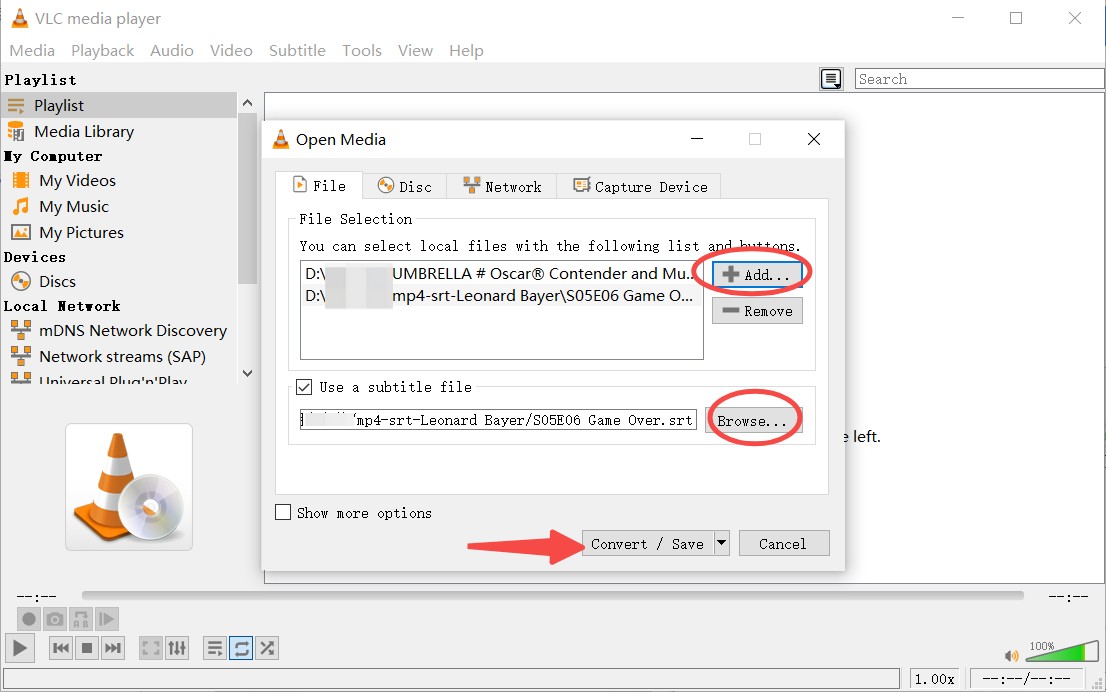
Step 3: Click "Convert / Save" again, then open the Profile edition window, choose MPEG-PS as "Encapsulation", and select MPEG-2 video. For a US NTSC DVD-Video project, the authoring target is 720x480 at 29.97 fps with DVD-compatible AC-3 or PCM audio at 48 kHz. The converted video is still a source file and must be authored into a DVD-Video structure before it can become a playable disc.
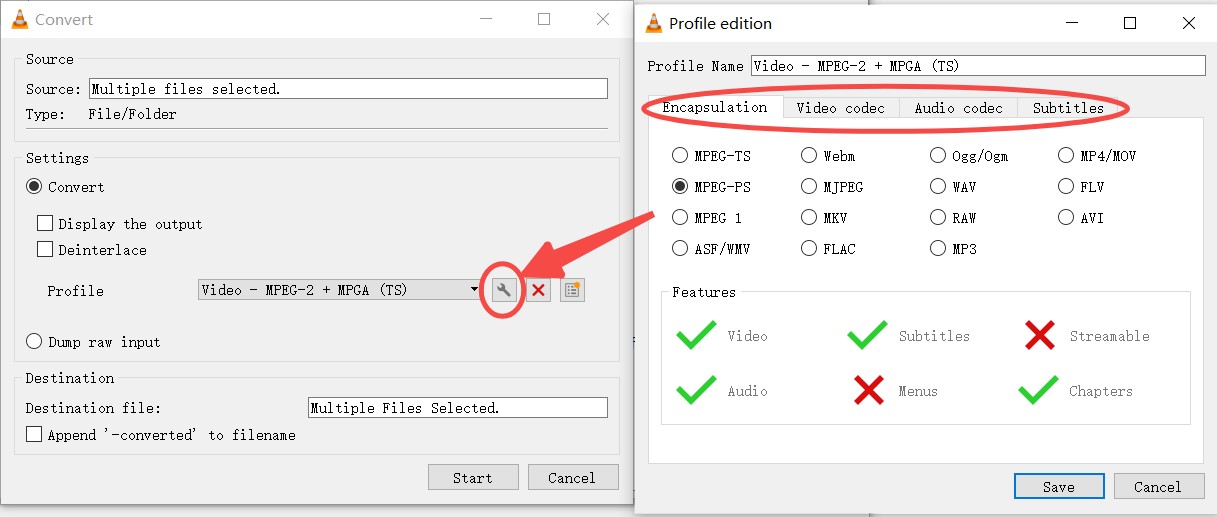
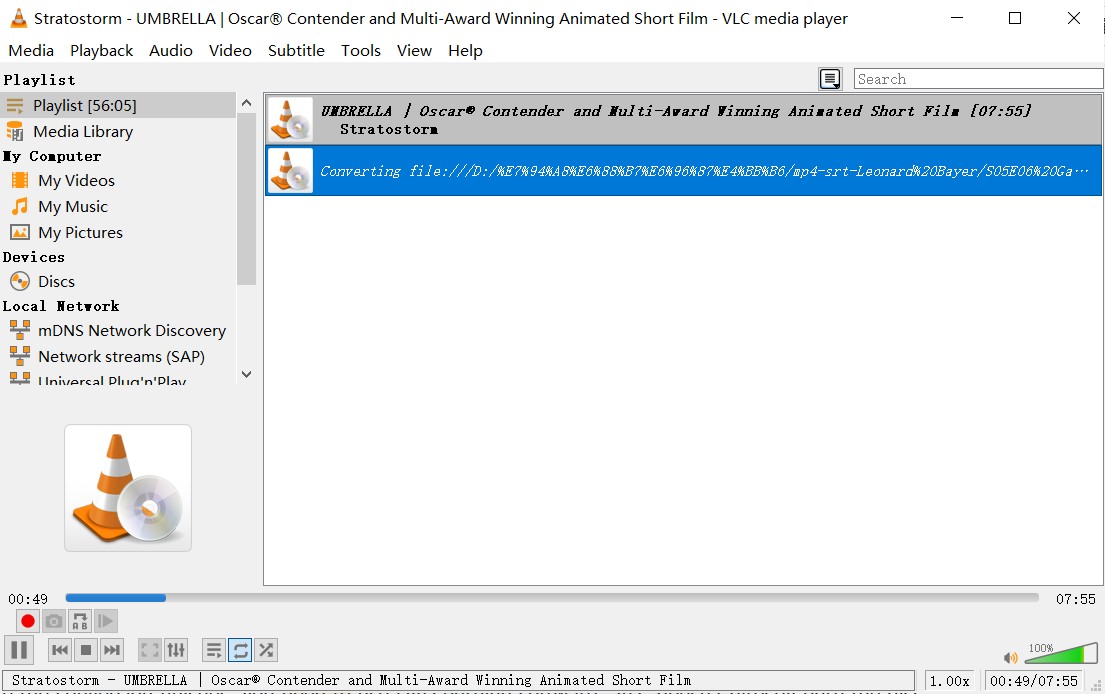
Step 4: Save the settings, go back to the previous window, and click Start. Then wait for VLC to complete the process.
Use Additional Tools to Burn the MPEG File to a DVD
VLC cannot build a DVD-Video structure or burn a blank disc, so additional software has to take the converted MPEG-2 file through the remaining stages. DVD Flick is a legacy authoring component that creates the VIDEO_TS layout, while ImgBurn writes that prepared output to the disc. DVD Flick's official download page lists Windows 2000, XP, Vista, and 7 support. ImgBurn version 2.5.8.0 was released on June 16, 2013.
Step 1: Download DVD Flick from the official site, install it, and open the program. Make sure you also install ImgBurn when prompted.
Step 2: Click "Add title" and select the MPEG-2 file created by VLC. DVD Flick accepts other formats as well. An MPEG-2 source may reduce preliminary conversion work, but DVD Flick can still re-encode it to match the DVD project settings. You can rearrange titles if you plan to include more than one video on the disc.
Step 3: Open "Project Settings" then "Video" and confirm that the format matches your region. You can also choose:
- Target size (4.7GB for single-layer DVDs)
- Encoder priority (faster vs. higher quality)
- Bitrate settings if you need to fit longer videos
These options help prevent issues like oversized projects or playback problems on older DVD players.
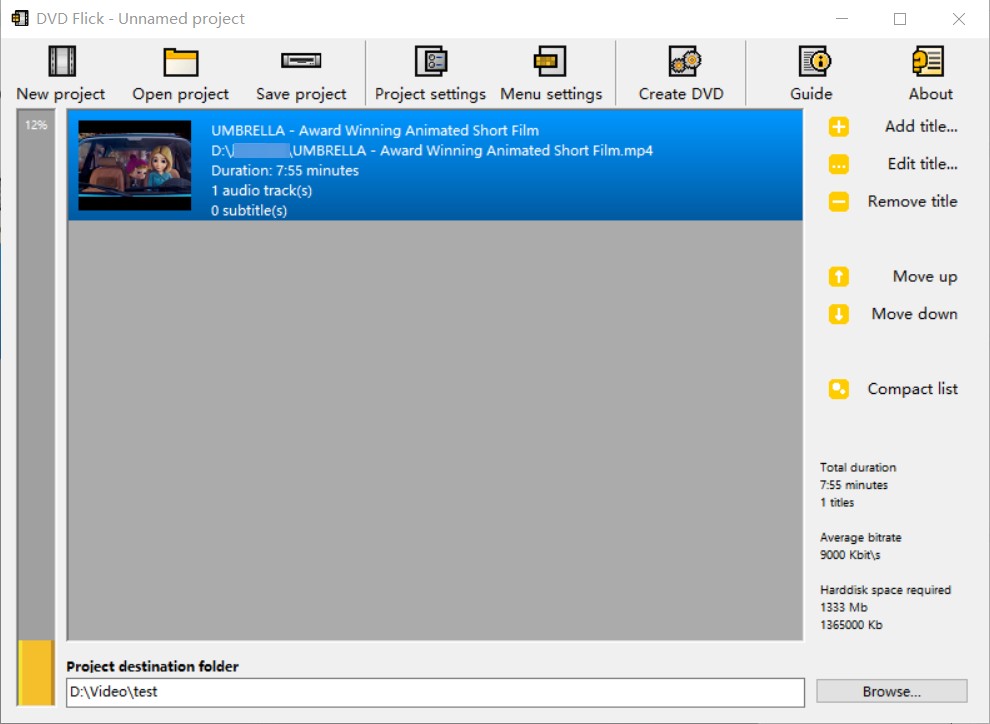
Optional: DVD Flick supports basic templates. Go to Menu Settings, enable a menu, and choose a style. While not mandatory, menus make navigation easier if you include multiple videos.
Step 4: Click "Browse" next to Project destination folder and pick a location with enough space. DVD Flick will create a full VIDEO_TS folder here, including IFO, BUP, and VOB files required by DVD-Video. Press "Create DVD".
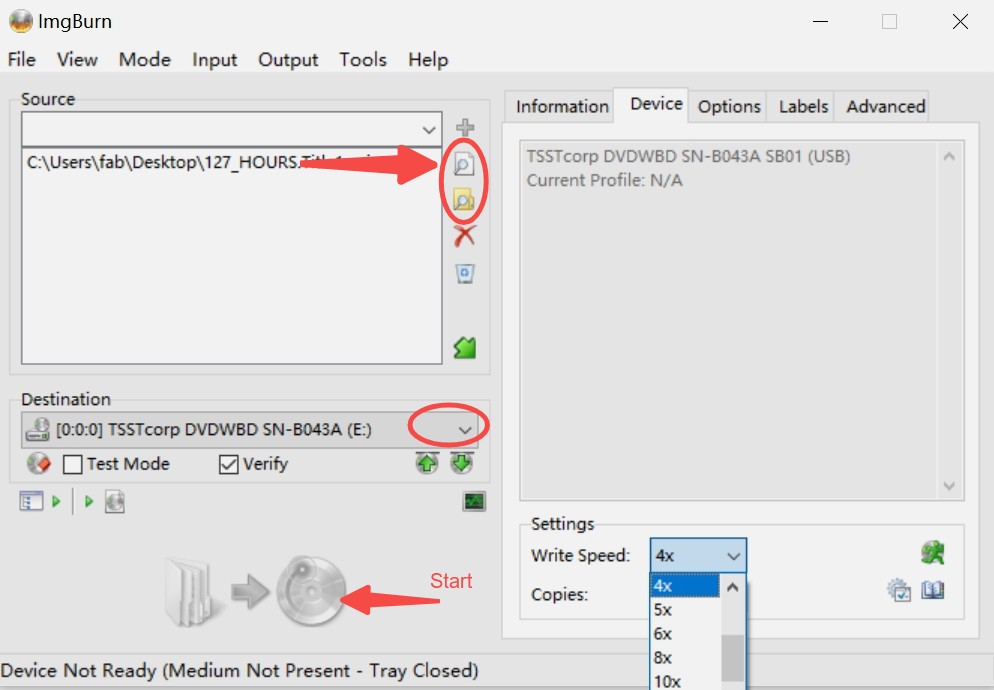
Step 5: ImgBurn will open with the VIDEO_TS folder already loaded. Before burning:
- Select your write-capable DVD drive in Destination
- Insert blank DVD media supported by the drive and destination player
- Choose a write speed supported by both the recorder and the blank media
Finally, click Write to burn the disc. Preview the authored VIDEO_TS output first, then test the finished disc in the DVD player where it will be used.
Pros and Cons of Using VLC DVD Burner
VLC is easy to access and works well as a video player, but its role in DVD creation is limited. Before relying on it for disc projects, it helps to know where it performs well and where it falls short.
- Supports many input and output formats, including conversion to MPEG-2 for DVD use.
- Lets you embed external subtitle files before conversion.
- Free, open source, and compatible with multiple platforms.
- No editing or DVD authoring tools such as chapters, menus, or layout control.
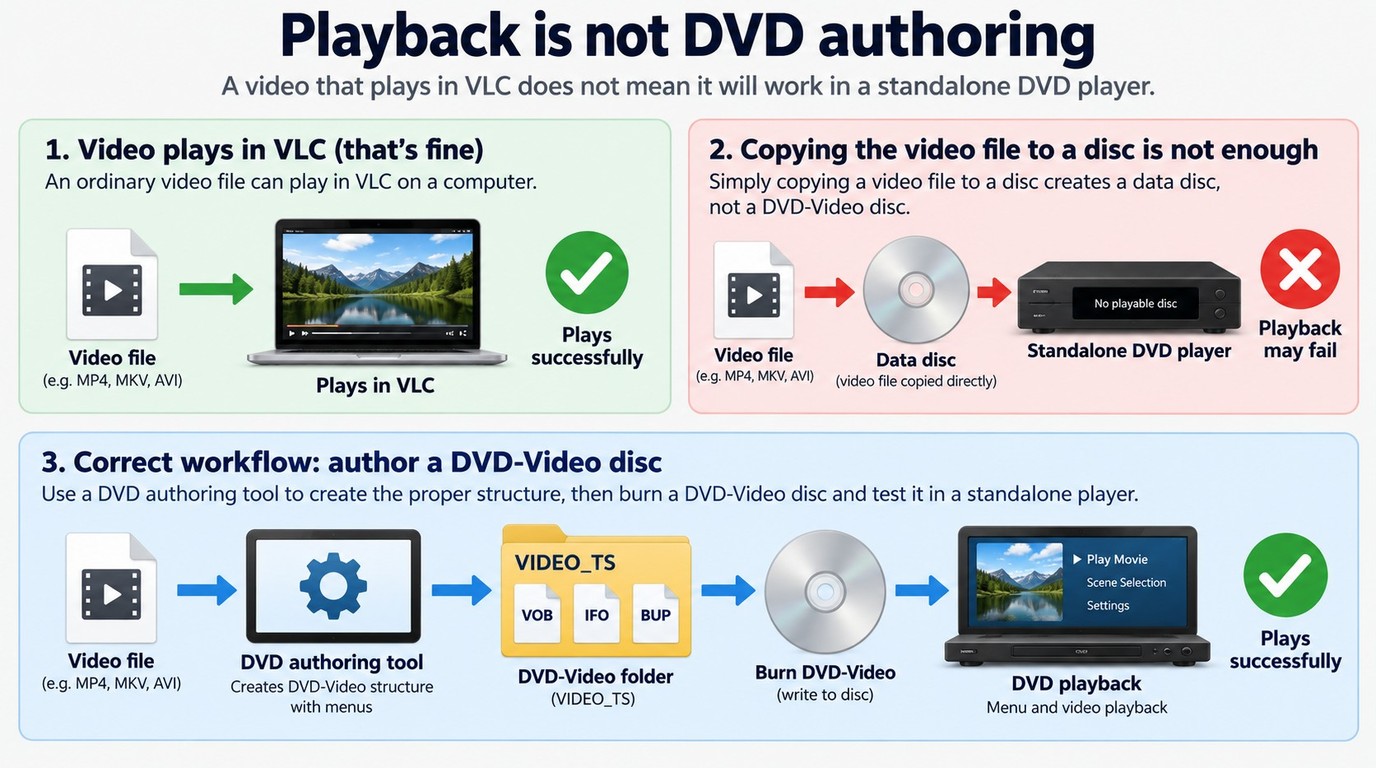
- Cannot build a DVD-Video structure or burn a disc without extra software.
- May prompt you to overwrite a file when the selected output name already exists.
The output changes at each stage:
| Stage | Required input | Result |
|---|---|---|
| VLC conversion | Source video | Converted video file |
| DVD-Video authoring | Video files | VIDEO_TS or DVD ISO |
| Disc writing | Authored folder or ISO | Physical DVD-Video disc |
A disc that plays correctly in VLC or another software player may still fail in a standalone DVD player, so computer playback is not a compatibility test.
DVD Authoring Tools with Menus for the VLC Workflow
Burning a DVD through VLC requires separate conversion, DVD-Video authoring, and disc-writing stages. DVDFab DVD Creator and DVDStyler can build menu-driven DVD-Video projects on Windows and macOS, while CDBurnerXP writes an already authored VIDEO_TS folder or ISO on Windows. The sections below distinguish tools that create the DVD structure from software that records prepared output onto a blank disc.
1. DVDFab DVD Creator (Windows and macOS)
DVDFab DVD Creator runs on Windows and macOS. Rather than treating conversion and disc authoring as separate steps the way the VLC workflow does, it handles local video import, menu authoring, and disc writing inside one program. It can also save the authored project as an ISO image or VIDEO_TS folder instead of writing a physical disc.
- • Disc Compatibility: Supports standard DVD-5 and DVD-9 discs.
- • Wide Format Support: Accepts more than 200 video formats for input.
- • Allows adding external subtitles in SRT and ASS formats.
- • Menu Templates: Includes preset menus with adjustable backgrounds and button layouts.
- • Basic Editing Tools: Offers trimming, cropping, and other simple edits before burning.
Use DVDFab DVD Creator only with local video you are authorized to use, and follow applicable law and platform terms.
How to burn a DVD with DVDFab DVD Creator
Step 1: Install DVDFab on your computer.
Step 2: Open the program and switch to the Creator module. The default mode should be DVD Creator.
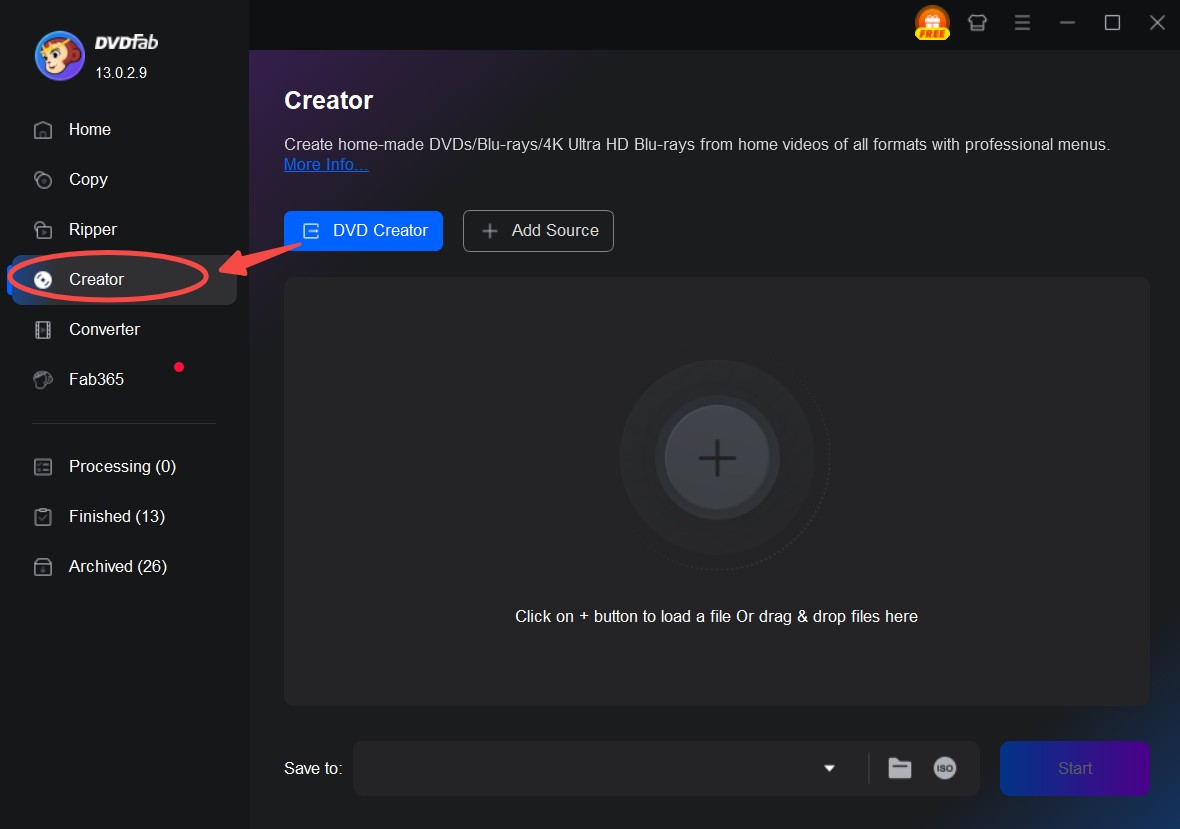
Step 3: Use the Add Source button to add video files, or drag and drop those videos you want to create a DVD. Add external subtitles to the video if needed.
Step 4: Open the Advanced Settings panel to set video quality. You can customize the size or choose "Fit to Disc" and set the output to DVD-5 or DVD-9.
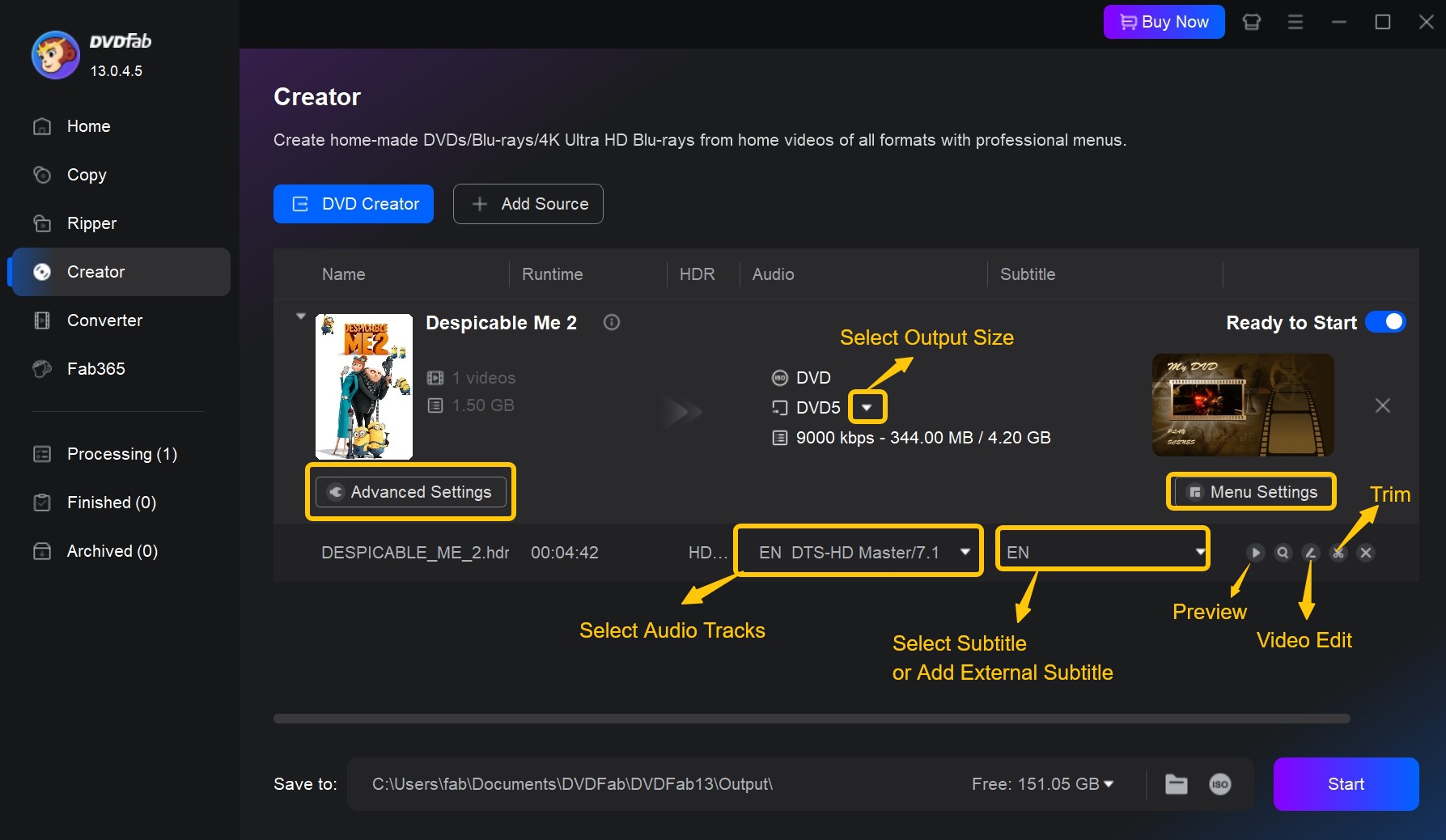
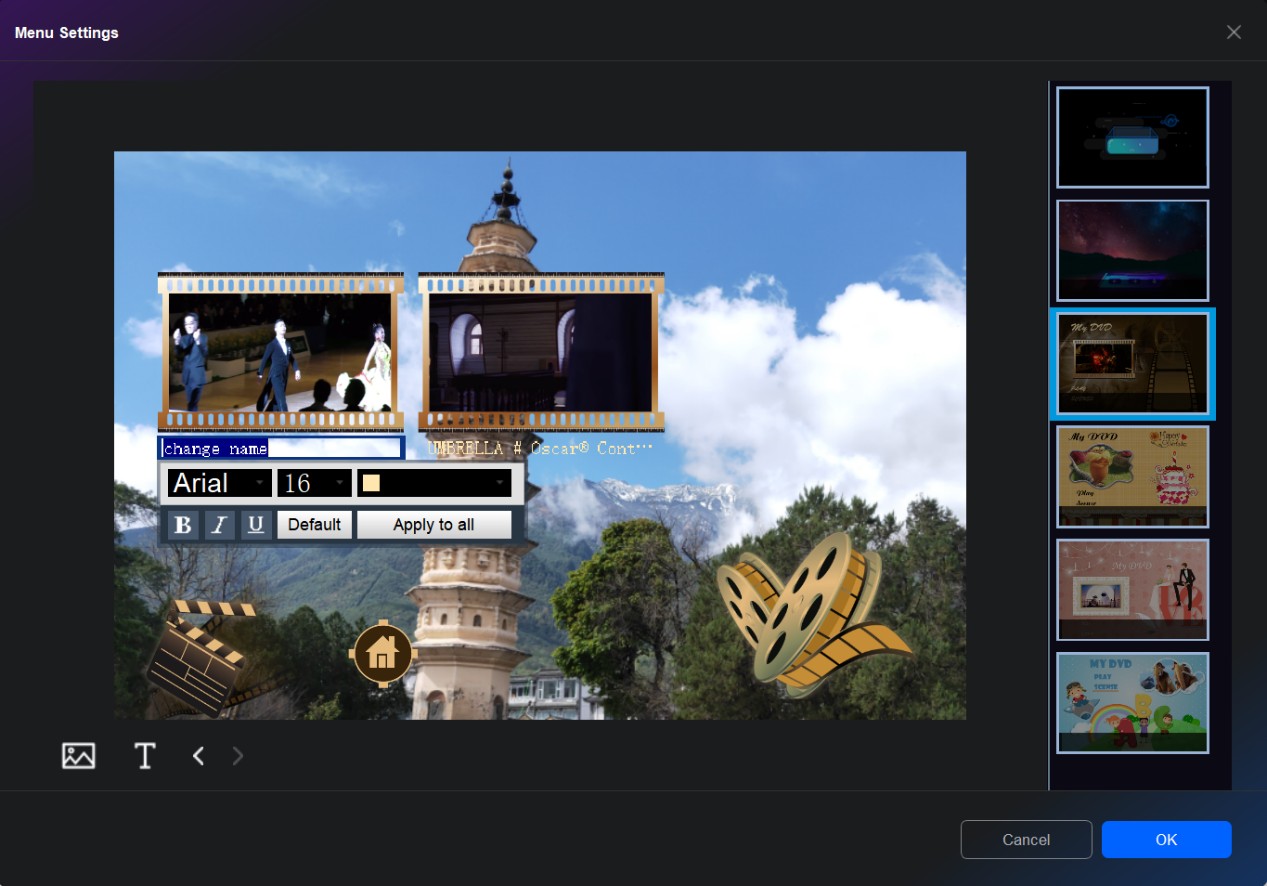
Step 5: In the Menu Settings panel, you can change the title name, add text, or change the background.
Step 6: In the Video Edit and Trim module, you can crop and trim footage, adjust color settings, and add a text or image watermark.
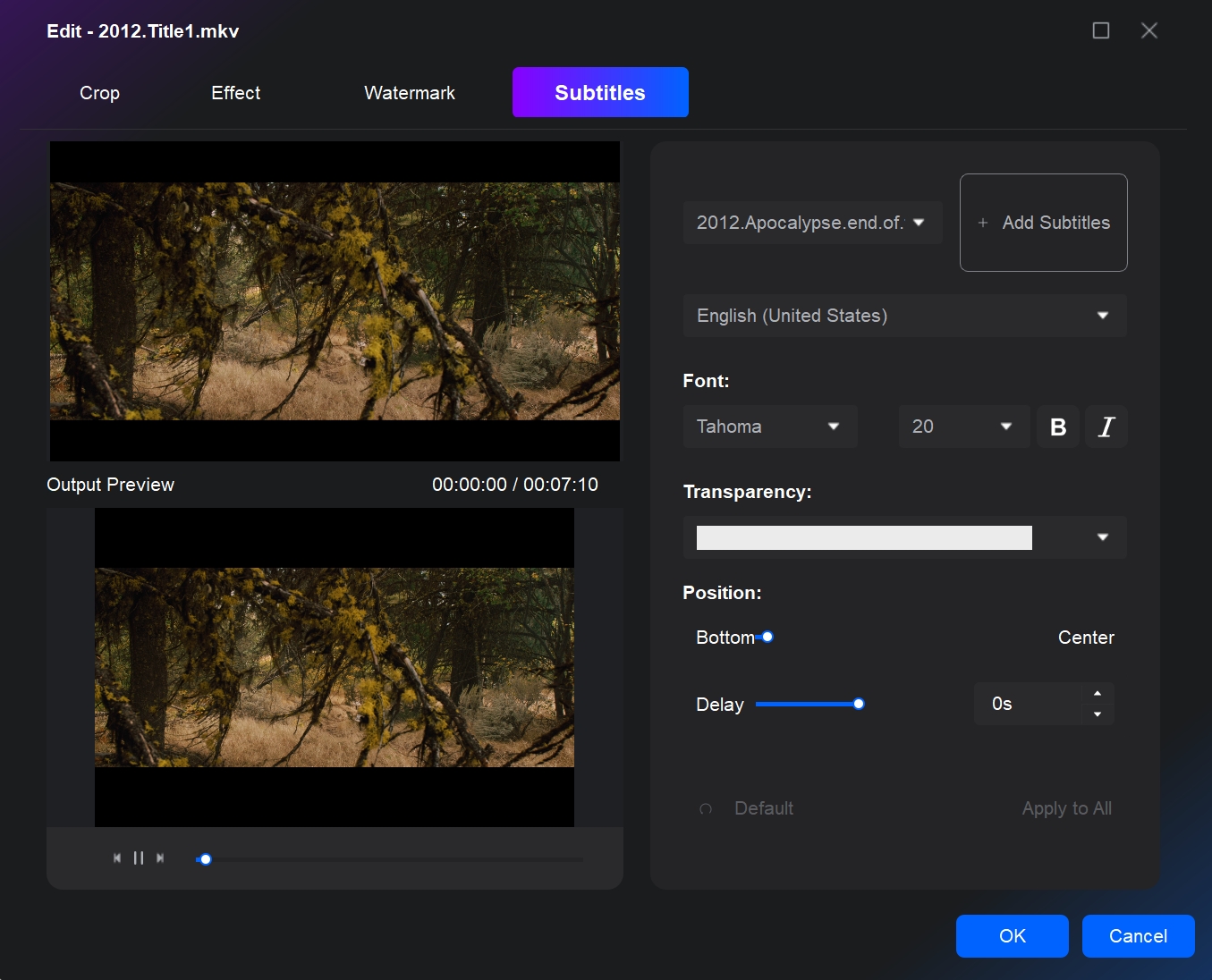
Step 7: Choose your burner in the target field in the lower area. Besides burning to blank DVDs, you can also save the DVD as a folder or ISO image file on your hard drive. If you want a physical disc, insert compatible blank media that matches the DVD-5 or DVD-9 output selected in the previous step.
For ISO or folder projects used in a media library, DVDFab DVD Creator can synchronize title, cast, and cover information into an .nfo sidecar for PlayerFab or Kodi.
Step 8: Wait until the process is complete. Depending on the target selected in Step 7, the result is a DVD-Video disc, ISO image, or VIDEO_TS folder.
DVD-Video authoring re-encodes video for standard-definition playback, so output quality depends on the source and disc-capacity settings. Adjust Advanced Settings or Fit to Disc to balance capacity and quality. A free trial is available; some features are limited.
2. DVDStyler (Windows and macOS)
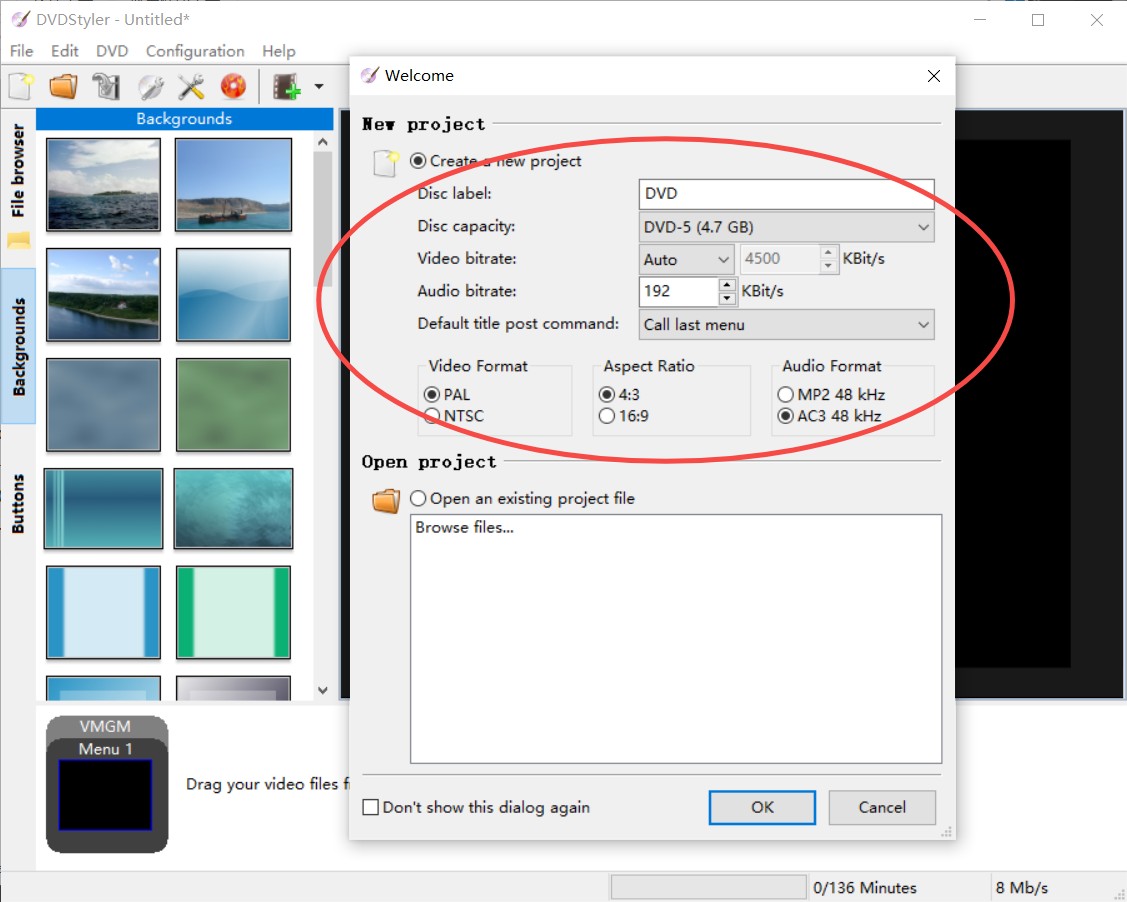
DVDStyler is a free, open source DVD burner for building menu-driven DVD-Video projects. It provides Windows downloads and a Mac installer for Mac OS X 10.15 or later, with tools for arranging titles, selecting PAL or NTSC output, and creating disc menus.
- Free and open source.
- Builds menu-driven DVD-Video projects with editable backgrounds, buttons, and text.
- Supports PAL and NTSC DVD-Video output.
- The Mac installer requires Mac OS X 10.15 or later.
3. CDBurnerXP for Prepared DVD Files (Windows)
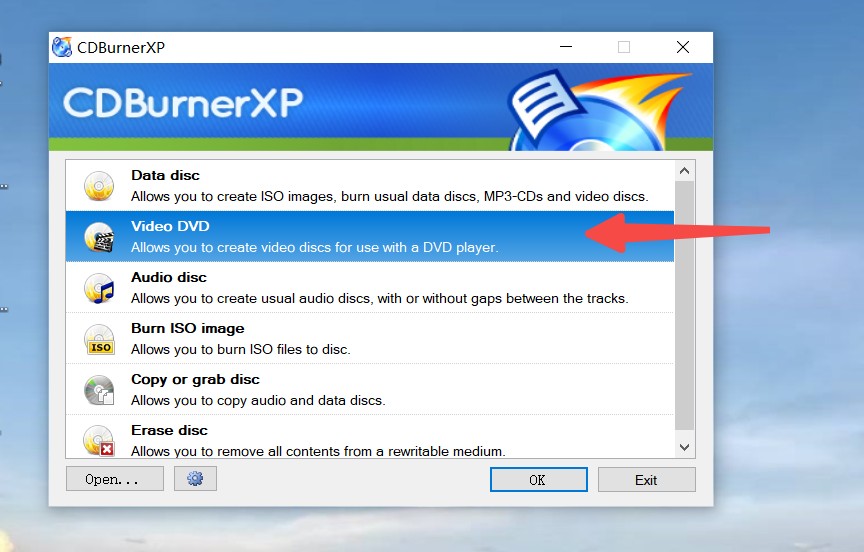
CDBurnerXP is a Windows disc-writing program for prepared DVD output. Use DVD authoring software first to turn source videos into a VIDEO_TS folder or DVD ISO; CDBurnerXP can then record that authored output onto compatible blank media. It does not turn an MP4 or other source video into a menu-authored DVD-Video project.
- Writes prepared VIDEO_TS folders to compatible blank DVDs.
- Supports writing and saving ISO images.
- Requires an already authored VIDEO_TS folder or DVD ISO.
- Available for Windows, with no macOS version.
FAQs
Which PAL or NTSC settings work in a DVD player?
For a US NTSC DVD-Video project, use 720x480 MPEG-2 video at 29.97 fps with DVD-compatible AC-3 or PCM audio at 48 kHz. PAL projects use 720x576 video at 25 fps. DVD-Video authoring creates a VIDEO_TS folder or DVD ISO; a disc-writing tool records that prepared output onto a blank DVD.
What's the difference between a data DVD and a video DVD?
A data DVD stores ordinary files such as MP4 videos or documents, much like a USB drive. A DVD-Video disc contains an authored VIDEO_TS structure with VOB, IFO, and BUP files, which allows compatible standalone DVD players to recognize menus, titles, and chapters.
Can I watch my video without burning a physical DVD?
Yes. VLC can play the original or converted video file directly, and it can also open an authored VIDEO_TS folder. A DVD ISO stores the complete authored disc layout for playback or later writing, while a standalone video file does not contain that DVD structure.
Why does my DVD work on a computer but not a DVD player?
Software players such as VLC can open material that some standalone players reject. Confirm that the disc contains an authored VIDEO_TS structure, uses media and PAL or NTSC settings supported by the destination player, and has synchronized audio. Write a short test disc, then check menu buttons, title selection, and chapter navigation on the target player before burning the full project.
Conclusion
VLC can convert and play video, but it cannot author a DVD-Video structure or write a finished disc. The free DVD Flick and ImgBurn workflow separates authoring from disc writing, with DVD Flick creating VIDEO_TS output and ImgBurn recording the prepared files; both are legacy components with older published support details. CDBurnerXP also starts with an already authored VIDEO_TS folder or DVD ISO. For menus and disc, ISO, or folder output in one program, DVDFab DVD Creator provides a combined Windows and macOS option.
For a wider look at complete authoring and disc-writing options, this comparison of the best DVD burner software explains how the available workflows differ. VLC is suitable for conversion and playback, while a complete authoring program is the clearer choice when you need menus and a finished DVD. Whichever workflow you pick, burn a short test disc and check its audio, menus, chapters, and playback in the destination DVD player before committing a full project to disc.

 How to Burn a DVD on Windows & Mac: 2026 Tested WaysBy Lucy Liu - Nov 12, 2026
 7 Best & Free DVD Menu Creators in 2026: How to Make a DVD Menu on Windows & MacBy Diana Smith - Nov 10, 2026
 5 Top AVI to DVD Converters for Windows and Mac [2026]By Diana Smith - Oct 20, 2026
 How to Burn MP3 to DVD: Best Audio DVD Creators Compared (2026)By Wenny Yan - Oct 15, 2026